The best lawn fertilizer for a given lawn depends on several factors. You need to know about soil conditions, types of grasses, and your maintenance goals to pick the best lawn fertilizer for your needs. Let’s find out more about these factors for making your fertilizer selection.
Learn about your soil condition
Your soil in your yard may be deficient in several key nutrients for a healthy yard. You can get soil testers at garden supply stores. One of the basic measurements is acid or alkaline levels. These affect your soil pH level. Nutrients that can make a big impact on the health of your lawn include nitrogen, phosphorous, potassium, iron, zinc, and sulfur.
Learn what your grass needs
For a healthy lawn, both cool-season and warm-season grasses need a balanced portion of nitrogen, phosphorous, and potassium. These three nutrients work together to keep the grass at its peak growth. Specific grasses may need more of particular nutrients, check with your garden supply store or a lawn and garden guide for the needs of your specific grass type.
Look for a fertilizer that offers a combination of nutrients
When you go to the garden supply store, you will see a wide variety of fertilizers that are specially formulated for different plants and grasses. Each bag is a nutrient analysis that can help you in your selection. You will often also see a set of three numbers on the bag, like 21-7-4. These numbers correspond to the amount of nitrogen, phosphorous, and potassium in the mixture.
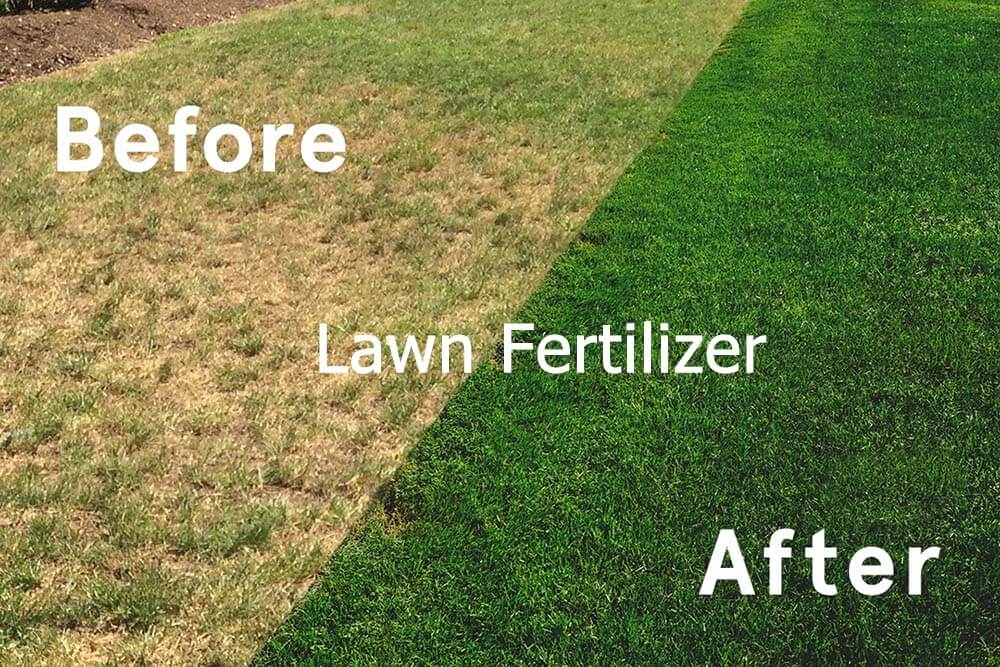
Nitrogen is the nutrient that provides the biggest impact to your lawn, it supports both greening and growth factors. Phosphorous helps with the root system development. Potassium helps your lawn resist disease.
Decide what type of fertilizer you want
Most of the fertilizers on the market now are chemical fertilizers. These are created by a chemical process and are often easier to apply that than the types of fertilizers.
Organic fertilizers get their nutrients from sources that were once alive, such as manures or fish emulsion. These sources help to build up the soil but can be slow-acting in cool weather.
Timed release fertilizers have coatings on the granules which dictate how quickly they can release their nutrients. The advantage of this type is you get a long-lasting feed to your lawn. The disadvantage is that you could be getting some nutrients delivered at times that don’t support the growth cycle of your grass.
Combination fertilizers add bug killer or weed killer to the mix, allowing you to address multiple lawn issues. This can be a big convenience to you if you are addressing multiple issues in your lawn maintenance.
Summary
Selecting a fertilizer can sometimes be a complex task. To make the best choice, learn about what your soil needs, as well as your lawn grass. Armed with that knowledge, you can make a smart selection of the best lawn fertilizer that works for you!
Want to know more about lawnmowers to cut your grass?

 Darren Farming Farm food organic life